
Pearl & Bead Restringing
Hand-Knotted. Built to Last.
Pearl and bead strands restrung by hand — knotted between each pearl on silk or specialty cord and finished with secured, customer-chosen clasps.
And when a piece
actually needs it.
Restringing replaces the silk or nylon cord that carries a strand of pearls or beads, with a hand-tied knot between each bead. The knots do two jobs: they stop pearls abrading each other, and they mean a break costs you one pearl rather than the whole strand across a floor. Cord absorbs body oils and stretches, so you need restringing when the strand droops, when gaps appear between beads, or roughly every one to two years on a regularly worn necklace.
Around $5 per inch, so an 18-inch strand lands near the price of a standard chain repair.
Ranges are consumer-facing guidance from our published guides. Every job is confirmed in writing after evaluation.
Read more in How Much Does Jewelry Repair Cost? and Is It Safe to Mail Jewelry for Repair?. Often paired with Clasp Replacement & Repair.
Engineered for
retail programs.
Every strand is measured pre-string, individually knotted, and finished to the customer's original length (or restored length if previously shortened).
We offer silk, nylon, and beading wire options with documentation on cord life expectancy so retail staff can set accurate re-stringing expectations.
Inside the
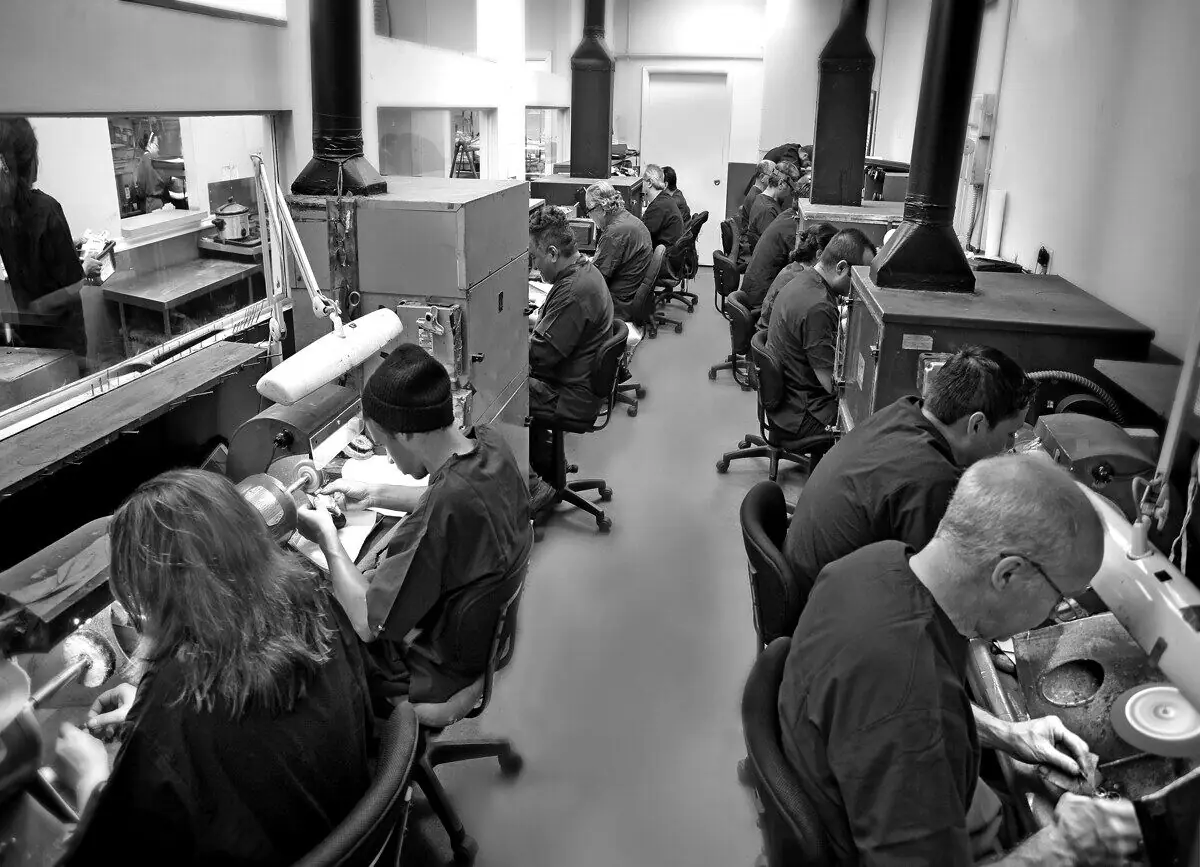
pearl & bead restringing bench.
Every job is bench-executed by senior jewelers — never outsourced, never automated past the standards of fine jewelry.
How the job
moves through.
Insured Intake
Pieces logged, photographed, and assigned a tracked job ticket on arrival.
Bench Execution
Routed to the senior jeweler matched to the repair discipline required.
Multi-Point QC
Second-jeweler inspection against original photos and your program spec.
Branded Return
Cleaned, polished, packaged in your branded materials, insured back to store.
Pearl & Bead Restringing,
answered.
Specific questions about pearl & bead restringing — what it costs, when it's needed, and what we do differently.
- How often should pearls be restrung?
- Every one to two years with regular wear, sooner if worn against perfume or skincare. If you can see cord between the knots, it is already overdue.
- Silk or nylon — which cord is better?
- Silk drapes better and is traditional for fine pearls; nylon lasts longer and resists moisture, which suits heavier beads and hard stones. We recommend per strand and document the choice.
- Can the strand be shortened or made longer?
- Yes. Length changes, graduated re-layouts, and tin-cup spacing are all done at restringing time, and a new clasp can be fitted in the same job.
Ready to add pearl & bead restringing to your
repair program?
Explore the full
repair bench.
Ring Sizing & Resizing
Precision ring sizing and resizing for retail chains and brand partners — sizing up, sizing down, and structural resizing across gold, silver, and platinum.
Learn about Ring Sizing & Resizing 02Prong Retipping & Rebuilding
Worn, broken, or missing prongs rebuilt and re-tipped under high magnification — protecting center stones and accent diamonds.
Learn about Prong Retipping & Rebuilding 03Stone Tightening & Replacement
Loose stones tightened, missing stones replaced — with GIA-graded matching for diamonds and bonded sourcing for colored stones.
Learn about Stone Tightening & Replacement